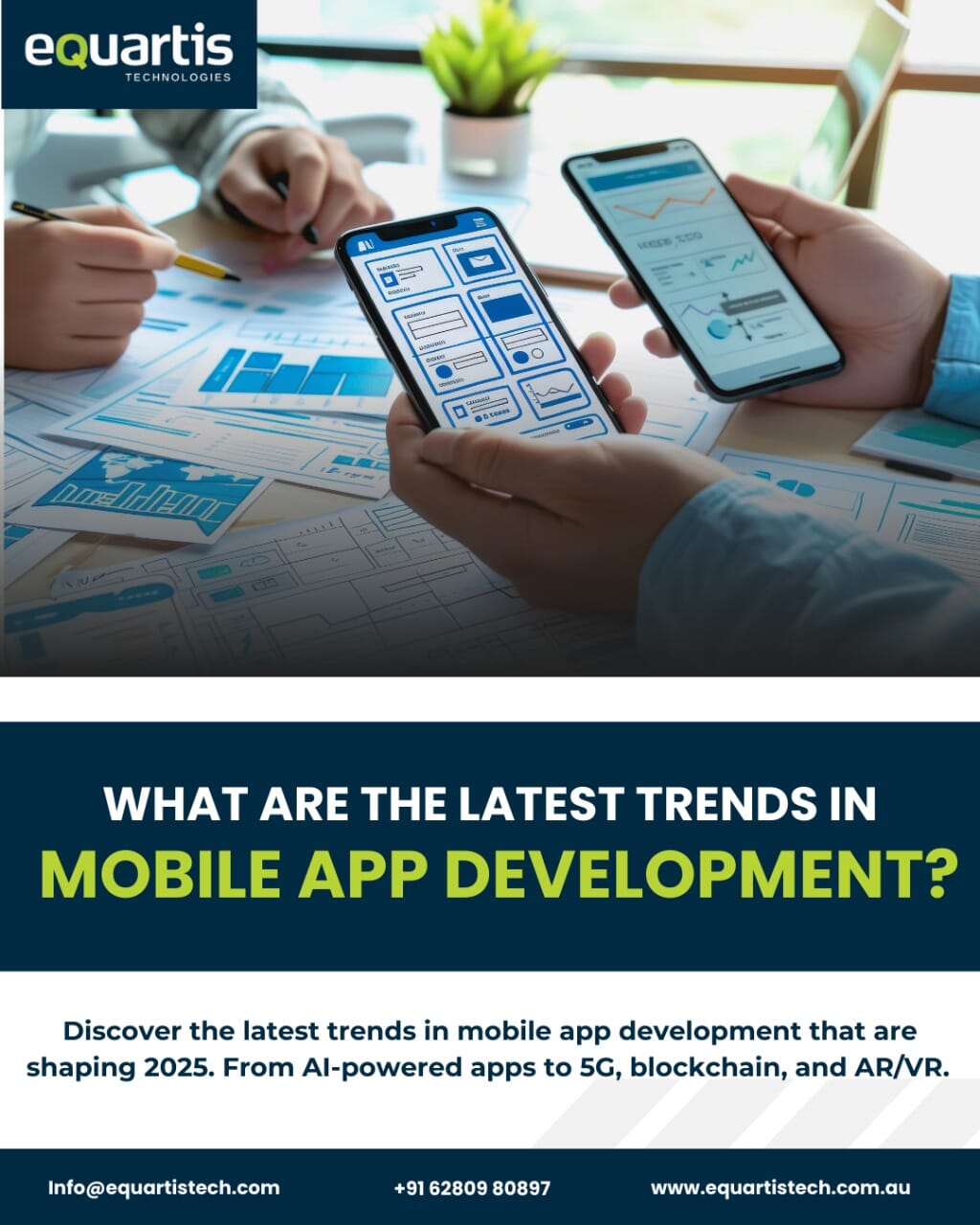
Mobile apps are no longer just tools—they’re ecosystems that shape how we shop, communicate, work, and even entertain ourselves. From ordering food to managing finances, apps have become a crucial part of daily life.
But the world of mobile app development is changing fast. Every year, new technologies, frameworks, and user expectations redefine how apps are built and experienced. For businesses, developers, and startups, staying ahead of the curve means understanding the latest trends in mobile app development.
In this blog, we’ll explore the most impactful innovations shaping the industry in 2025 and beyond. Whether you’re a business owner planning a new app or a marketer strategizing for the future, these insights into the current trends in mobile app development will help you stay competitive.
Why It’s Important to Follow the Latest Trends
The mobile app industry is one of the fastest-growing digital sectors, with millions of apps competing for user attention. Following the latest app development trends is crucial because:
- User expectations evolve quickly: People now expect faster, smarter, and more personalized apps.
- Technology drives opportunities: Emerging tech opens new markets and user experiences.
- Competition is intense: Businesses that don’t innovate risk being left behind.
- Better ROI: Apps designed with the latest technologies attract more downloads and engagement.
By aligning with the latest trends in mobile app development, you future-proof your investment and create apps that users love.
The Latest Trends in Mobile App Development
Let’s break down the top trends that are shaping the industry today.
1. Artificial Intelligence (AI) and Machine Learning
AI is no longer a buzzword—it’s everywhere in apps. From personalized recommendations on Netflix to smart assistants like Siri, AI is transforming user experiences.
How AI is used in apps:
- Predictive analytics for personalized shopping.
- AI chatbots for 24/7 customer service.
- Smart photo editing (e.g., filters, object recognition).
- AI-powered healthcare apps for diagnosis support.
👉 This is one of the latest app development trends that adds both intelligence and automation to mobile experiences.
2. 5G Technology Integration
The rollout of 5G is revolutionizing mobile app possibilities with faster speed and lower latency.
Impact on mobile apps:
- Real-time multiplayer gaming with no lag.
- Smoother video streaming in 4K and 8K.
- AR/VR apps with enhanced performance.
- Faster data transfers for IoT devices.
5G makes it possible for developers to innovate without being limited by network speed—a game-changer in the current trends in mobile app development.
3. Augmented Reality (AR) and Virtual Reality (VR)
Apps are no longer confined to screens—AR and VR bring immersive experiences.
Examples:
- AR try-ons in fashion and retail (IKEA, Sephora).
- VR-based learning and simulations in education.
- AR gaming apps like Pokémon Go.
This trend is reshaping industries by merging the digital and physical worlds. It’s becoming one of the latest trends in mobile app development for user engagement.
4. Internet of Things (IoT) Apps
Smart homes, wearables, and connected cars are now mainstream. Apps are the glue that connects these devices.
Use cases of IoT apps:
- Smart home control (lights, thermostats, security).
- Fitness tracking via wearables.
- Industrial IoT for predictive maintenance.
- Connected healthcare devices.
With more people investing in smart devices, IoT app development is skyrocketing in popularity.
5. Blockchain Technology
Blockchain isn’t just for cryptocurrency—it’s transforming app security and transparency.
Applications in mobile apps:
- Secure digital payments.
- Decentralized apps (dApps).
- Transparent supply chain tracking.
- Identity verification and secure data storage.
Blockchain ensures trust and safety, making it one of the current trends in mobile app development with long-term potential.
6. Cloud-Based Mobile Apps
Cloud integration makes apps more powerful and lightweight.
Benefits:
- Access data from multiple devices.
- Reduced app size, saving storage.
- Enhanced scalability and collaboration features.
- Stronger security with cloud infrastructure.
Apps like Google Drive, Dropbox, and Slack showcase the power of cloud integration.
7. Mobile Commerce (M-Commerce)
E-commerce has shifted toward mobile-first strategies. Businesses are building apps that provide seamless shopping experiences.
Key features in m-commerce apps:
- One-click payments.
- Personalized product recommendations.
- Loyalty programs and discounts.
- Augmented reality product previews.
With mobile transactions growing every year, m-commerce is a dominant part of the latest app development trends.
8. Voice Technology and Voice User Interfaces (VUIs)
Voice assistants like Alexa, Google Assistant, and Siri are shaping how users interact with apps.
Why it matters:
- Hands-free convenience.
- Accessibility for visually impaired users.
- Faster searches and commands.
More apps are adding voice user interfaces to improve usability and inclusivity.
9. Super Apps
Instead of multiple apps, super apps offer everything in one place. Popular in Asia, this trend is spreading globally.
Examples:
- WeChat in China (chat, payments, shopping, booking).
- Gojek in Indonesia (ride-hailing, food delivery, e-wallet).
Businesses are exploring super apps as a way to increase user retention and revenue.
10. On-Demand Apps
Users love apps that solve problems instantly. On-demand apps continue to grow in industries like transport, food, and healthcare.
Examples:
- Uber and Lyft (ride-hailing).
- DoorDash and UberEats (food delivery).
- Telemedicine apps (doctor consultations).
The demand for convenience is keeping this trend alive.
11. Wearable Technology Integration
Smartwatches and fitness trackers are booming, and mobile apps are essential for syncing and controlling these devices.
Use cases:
- Health and fitness tracking.
- Smartwatch apps for quick notifications.
- Payments via wearables.
This is one of the current trends in mobile app development that expands apps beyond smartphones.
12. Security and Privacy-Focused Apps
With growing concerns about data breaches, users demand safer apps.
Key approaches:
- Biometric authentication (face/fingerprint ID).
- End-to-end encryption.
- Privacy-first design.
- Compliance with GDPR and other laws.
Apps that prioritize security win user trust and loyalty.
13. Low-Code and No-Code Development
Startups and businesses are leveraging low-code/no-code platforms to speed up development.
Benefits:
- Faster time-to-market.
- Cost-effective for small businesses.
- Easy customization without coding expertise.
This trend is democratizing app development, making it accessible to non-developers.
14. Progressive Web Apps (PWAs)
PWAs combine the best of websites and mobile apps.
Advantages:
- Work offline.
- Faster loading times.
- No need for app store downloads.
- Cross-platform compatibility.
Brands like Twitter and Starbucks are already using PWAs to boost engagement.
Challenges in Adopting the Latest Trends
While the latest trends in mobile app development are exciting, businesses face challenges:
- High development costs.
- Rapidly changing technologies.
- Security risks with new tech.
- User resistance to change.
Overcoming these requires a balance of innovation and practicality.
Best Practices for Leveraging Mobile App Trends
- Stay user-focused: Trends should solve real problems.
- Test new technologies: Start with pilot projects.
- Invest in security: Never compromise user trust.
- Adopt agile methods: Flexibility is key in fast-moving industries.
- Plan for scalability: Trends often evolve quickly.
These practices help businesses succeed while embracing the latest app development trends.
The Future of Mobile App Development
The current trends in mobile app development show that apps are moving toward more intelligent, personalized, and immersive experiences. Over the next few years, we can expect:
- AI to become even more predictive and proactive.
- AR/VR to reshape industries like retail, real estate, and healthcare.
- Super apps to expand beyond Asia.
- Sustainability-focused apps helping users reduce carbon footprints.
The future belongs to businesses that innovate early and align with these trends.
Conclusion
The latest trends in mobile app development are transforming how users interact with technology. From AI, AR/VR, and blockchain to voice tech and 5G, these innovations are setting new benchmarks for app performance, usability, and security.
By keeping an eye on the current trends in mobile app development, businesses can stay competitive and deliver experiences users love. The apps that thrive will be those built with innovation, user needs, and long-term vision in mind.